Natural Resource Sector - Mineral Titles Branch
Client: CBRE/ WDS
Location: Vancouver, BC
Program: Government Leading Workplace
Photography: Brett Ryan Studios
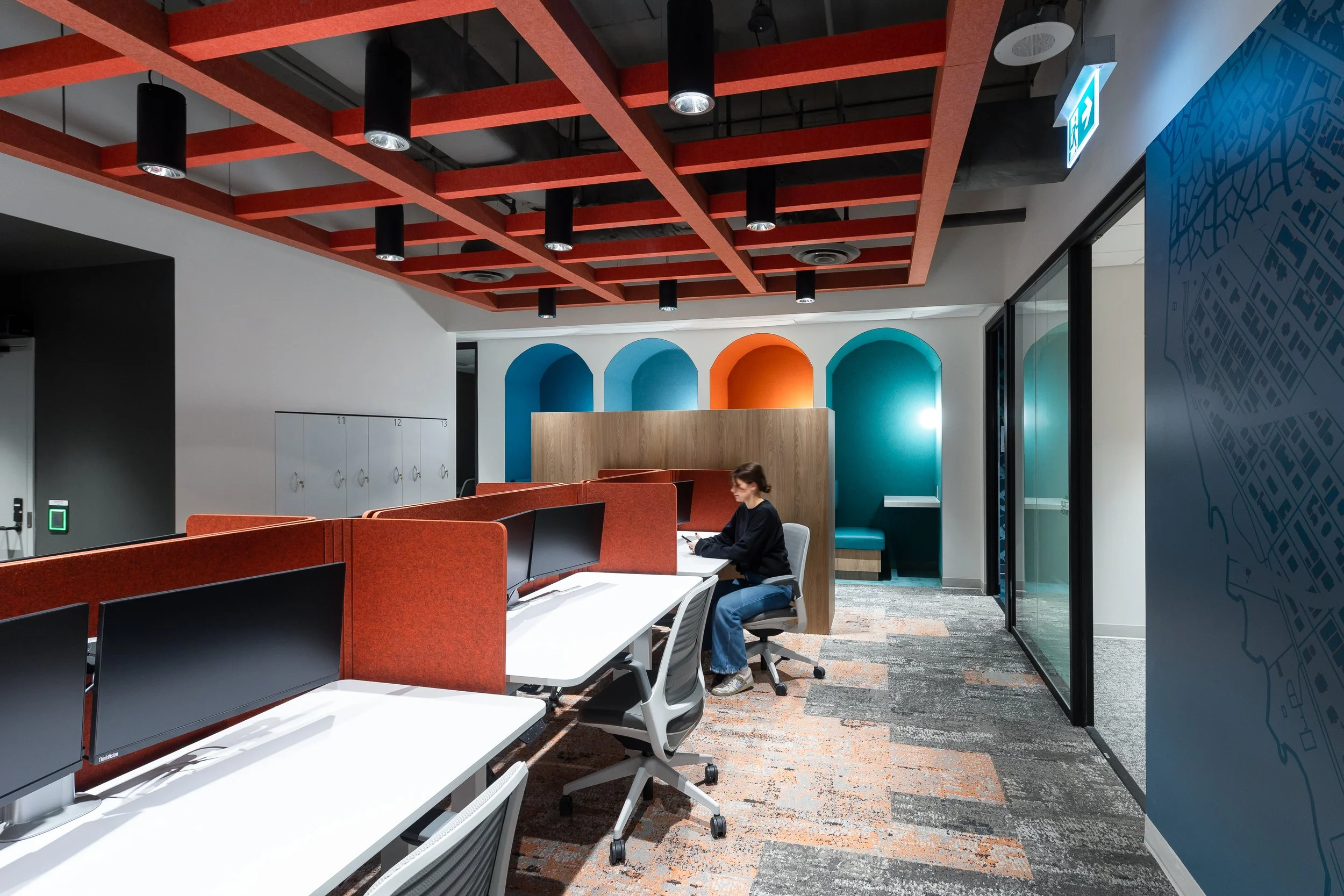
Bringing three separate government ministries into a single floor plate at 865 Hornby meant more than finding space for everyone. The goal was to design a workplace that could support three distinct ways of working within one shared environment.
The project was shaped by the Province's Leading Workplace Standards, which challenged the usual assumption that everyone needs the same workstation.
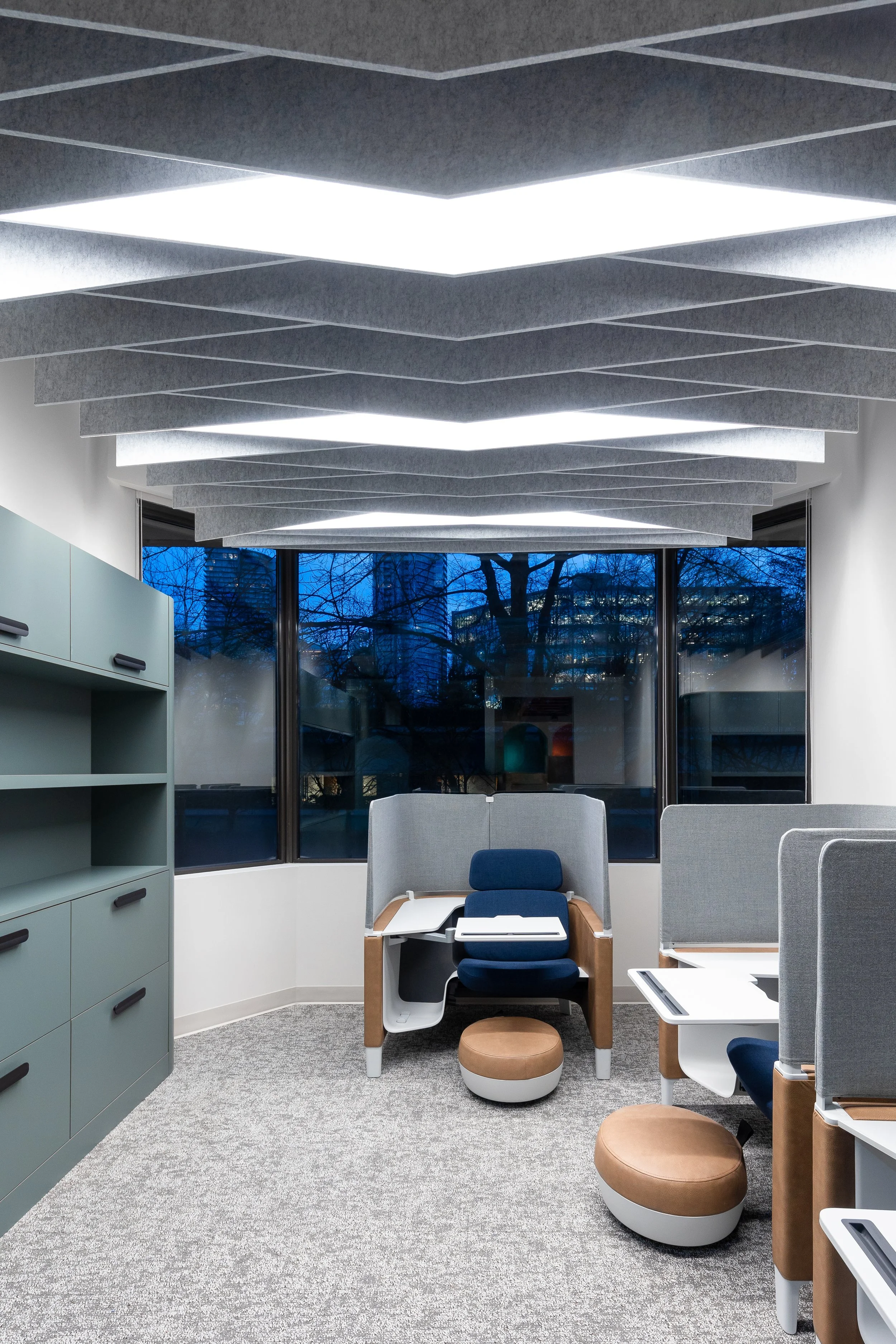
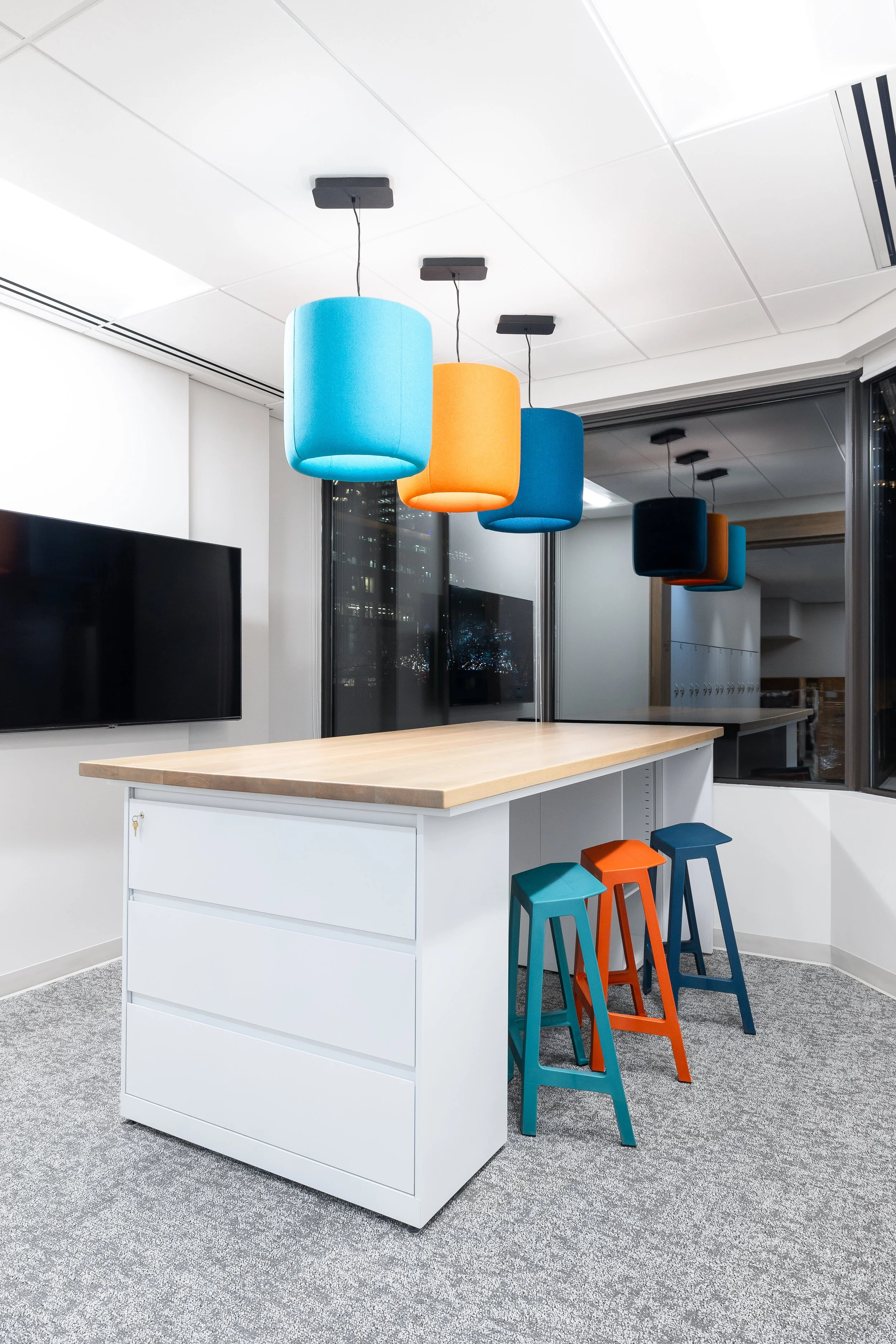
Instead of organizing the floor plan around departments, the design was organized around activity: focused work, collaboration, private calls, and group meetings. That shift produced a varied landscape of spaces — from resident and flexible workpoints, quiet rooms, privacy rooms, and solo booths, to meeting rooms, and social areas — giving staff genuine choice about where to spend their day.
Standardization and identity don't have to be opposed.
Working within a government framework often risks producing something generic. One of the key realizations here was that standardization and identity didn't have to be opposed.
The planning is systematic, with shared amenities, modular workpoints, a repeatable logic for focus and meeting space, but the experience was designed to be specific to Vancouver.
The colour palette, proposed by O4, draws from the skyline at dusk: blues and teals that reference the water, sky, and mountains, with stronger oranges resembling the warmth of sunset.
In the smaller spaces (privacy rooms and solo booths), those colours become immersive. In the broader workplace, they stay present but restrained.
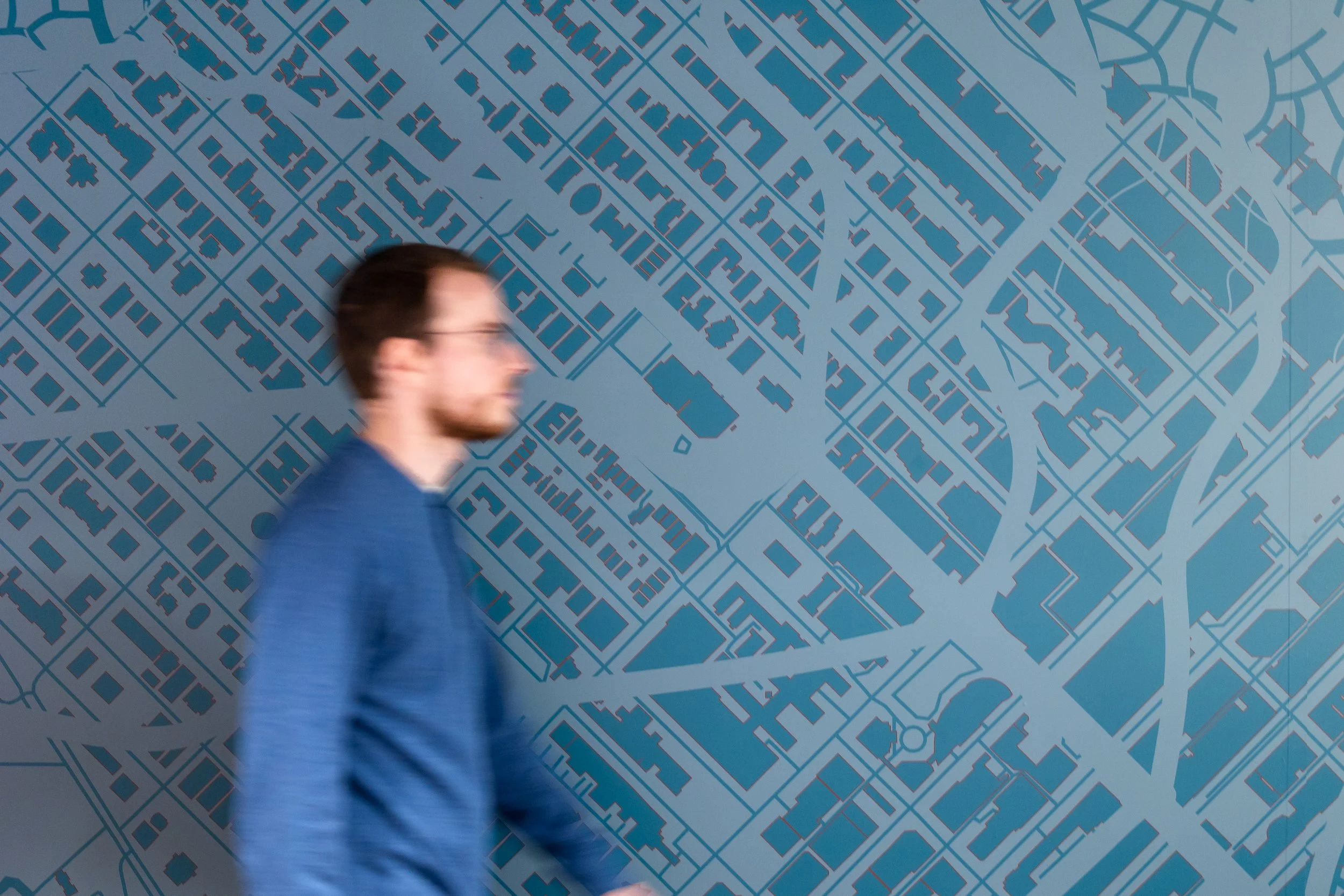
Graphics extend the same idea, referencing the mountain range visible from downtown and incorporating a map of the core, used for wayfinding and placemaking rather than simple signage.
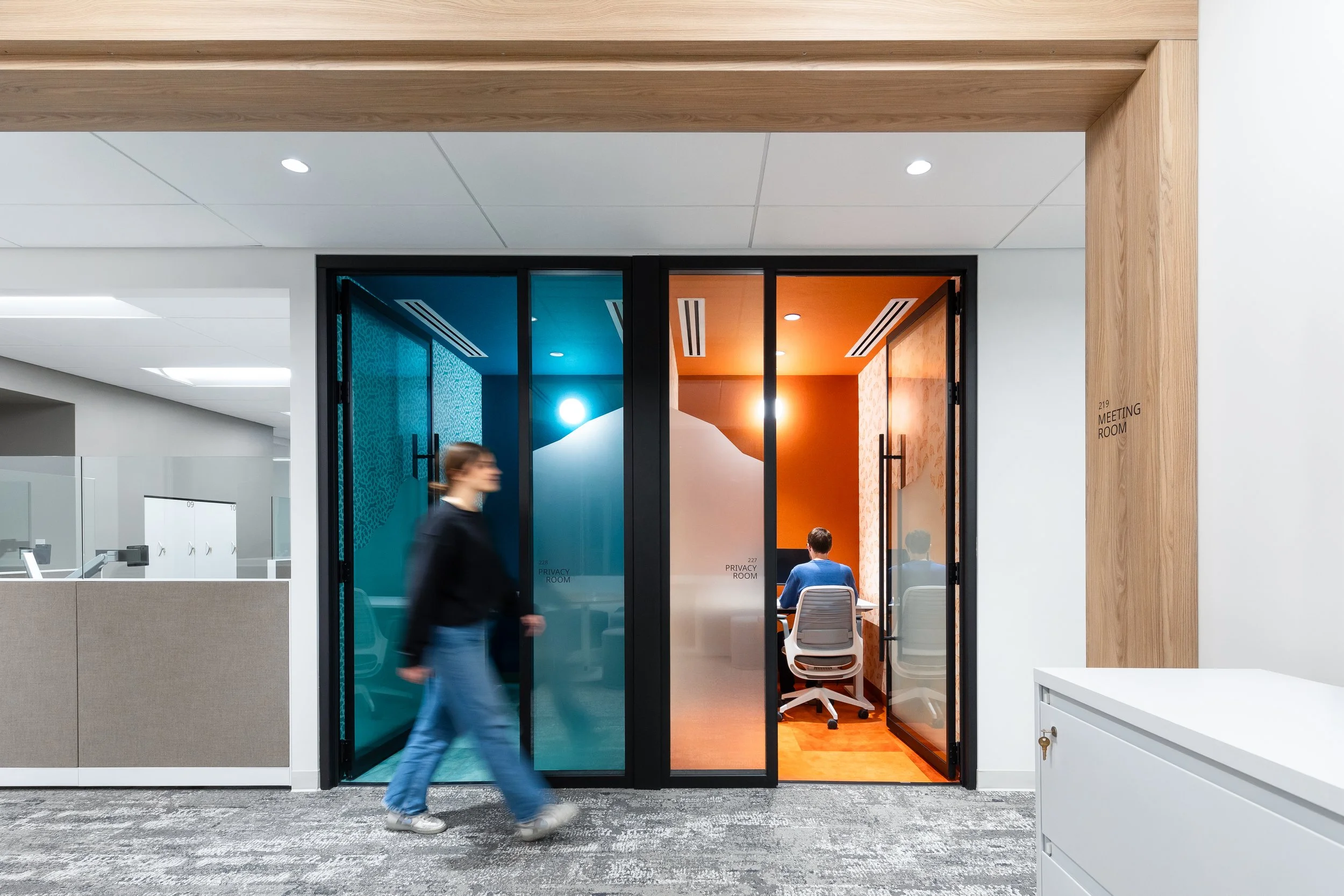


Acoustics were addressed at two scales. At the planning level, the floor plate works as a gradient of privacy — from open workpoints and collaborative settings through to semi-private meeting areas, quiet rooms, enclosed privacy rooms, and individual solo booths.
We needed to go beyond planning, so architectural acoustic design was integrated throughout the different design phases. By doing it this way, each setting performs correctly.
What holds the project together is the balance between systems thinking and human experience. Underneath the design is a lot of infrastructure — work modes, modular planning, shared resources, privacy gradients, acoustic control, and technology — but the resulting space aimed to feel like a workplace with warmth, colour, and care.
In addition to the tenant fit-out, O4 managed the furniture procurement, installation, and move coordination, ensuring a seamless transition to the new space.