British Columbia Utilities Commission Office Renovation
Client: Workplace Development Services | Ministry of Citizens’ Services
Location: Vancouver, BC
Program: Commercial
Photography: Brett Ryan Studios
The British Columbia Utilities Commission (BCUC) sought to transform their workspace into a flexible, high-performing environment that supports evolving operational needs and facilitates clear, effective collaboration between the Commission, the public, and the media. As a quasi-judicial public oversight agency, the space needed to reflect the seriousness of their work while remaining accessible, welcoming, and adaptable.
At the core of the renovation is the Hearing Room, conceived as the project’s central civic space. Rather than relying on surface-level visual upgrades, the design addresses deeper spatial and technical requirements. The room supports a wide range of configurations—from formal quasi-judicial hearings to Indigenous hearing formats, virtual participation, and televised events—while maintaining strong sightlines, acoustic control, and integrated technology.
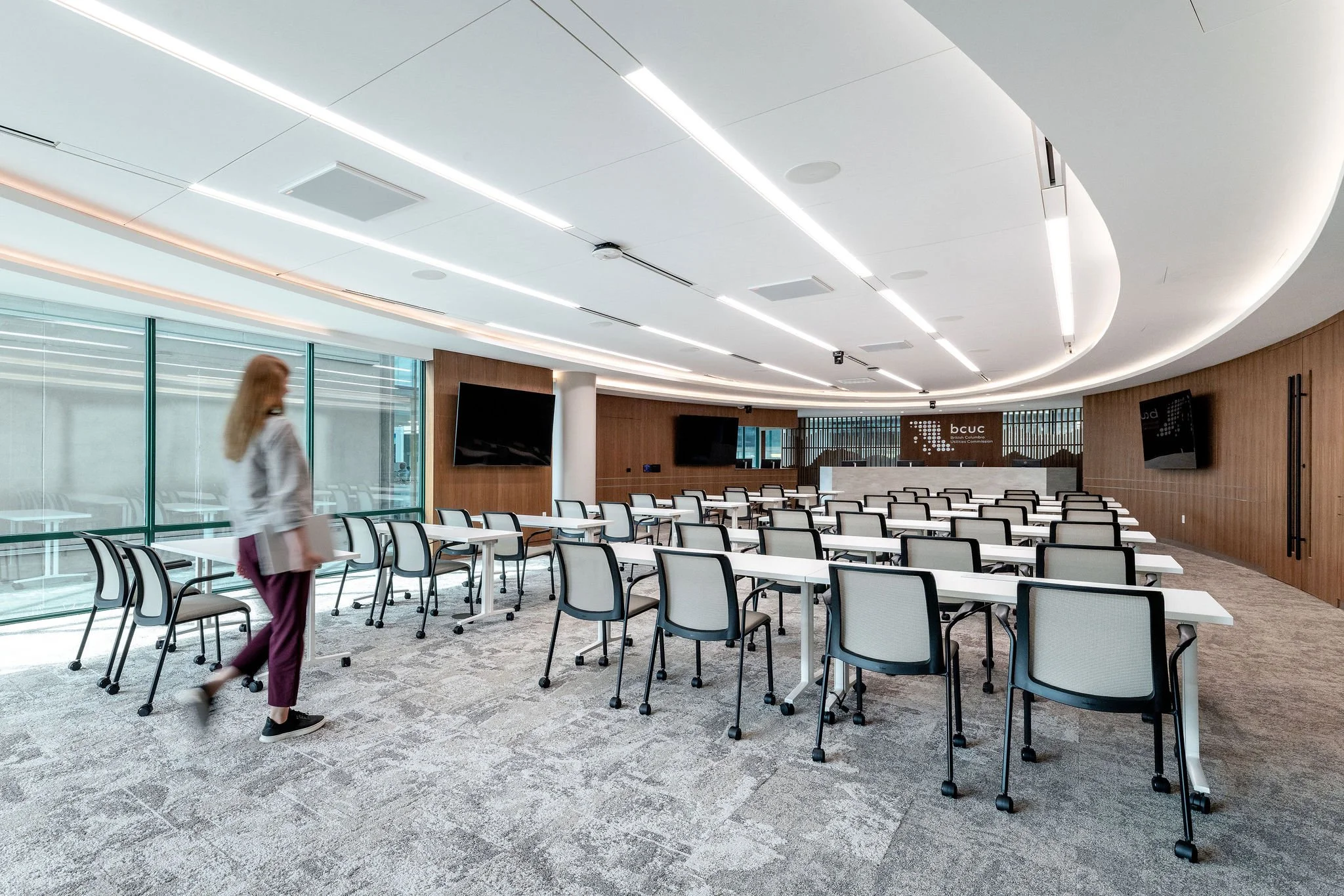
The primary physical challenge was creating a more capable hearing environment within the strict constraints of an existing building footprint and legacy systems. A critical turning point was addressing the ceiling height. To ensure the room felt dignified and comfortable rather than visually compressed, we reworked the existing mechanical systems to maximize the perceived volume. This was not merely a technical adjustment, but a fundamental architectural move that directly improved the spatial quality and scale of the room.
Equally important was how the space performs both functionally and symbolically for diverse user groups. Conversations with technical consultants and hearing participants highlighted the need to accommodate Indigenous hearing formats, which do not utilize a formal dais in the traditional sense. The architectural composition responds to this by allowing the dais and surrounding elements to visually recede into the background when the room is configured in a more circular or informal arrangement. This ensures the space always feels intentional and balanced, whether hosting a meeting of 20 people or a hearing with 120.
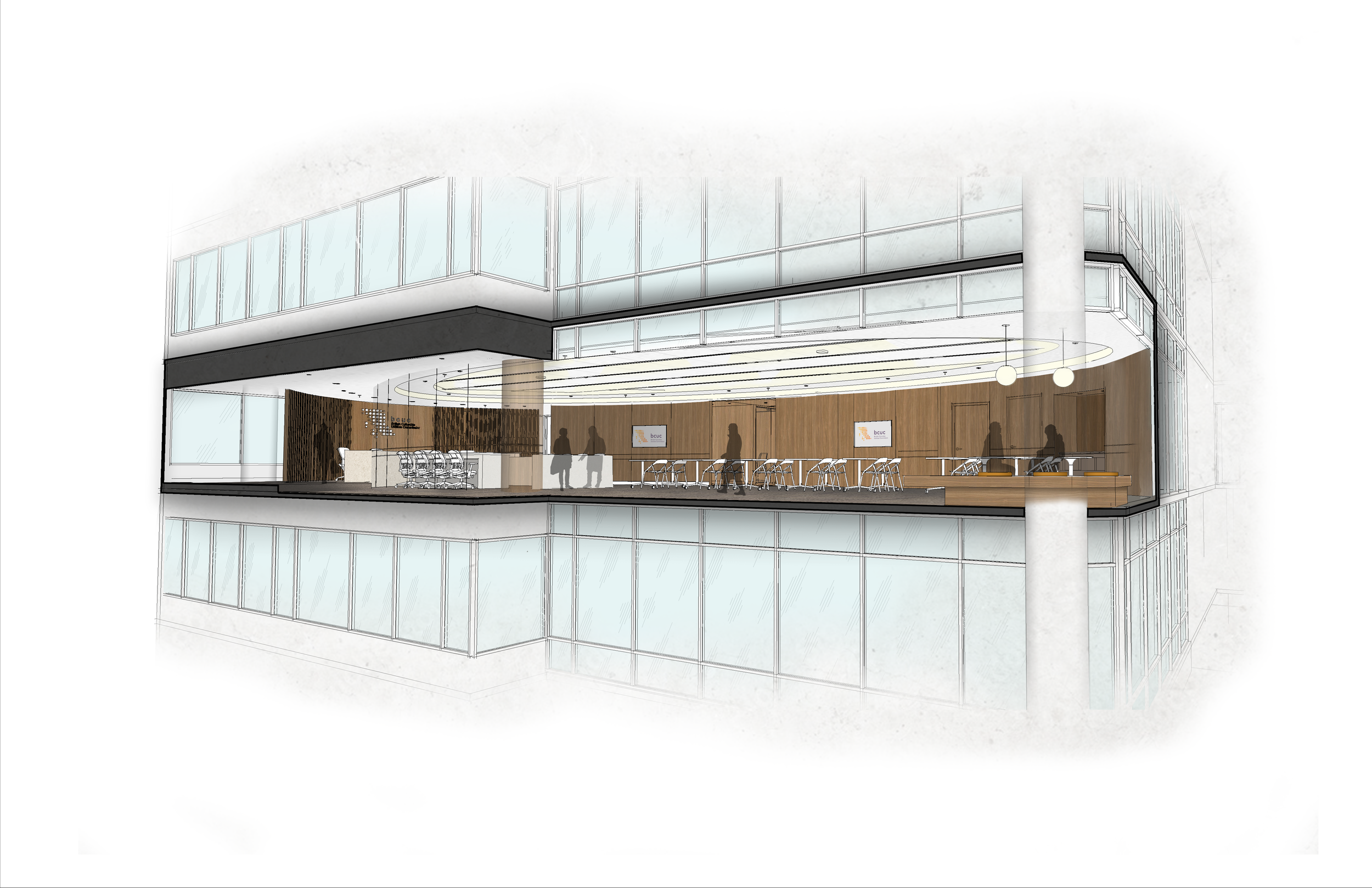
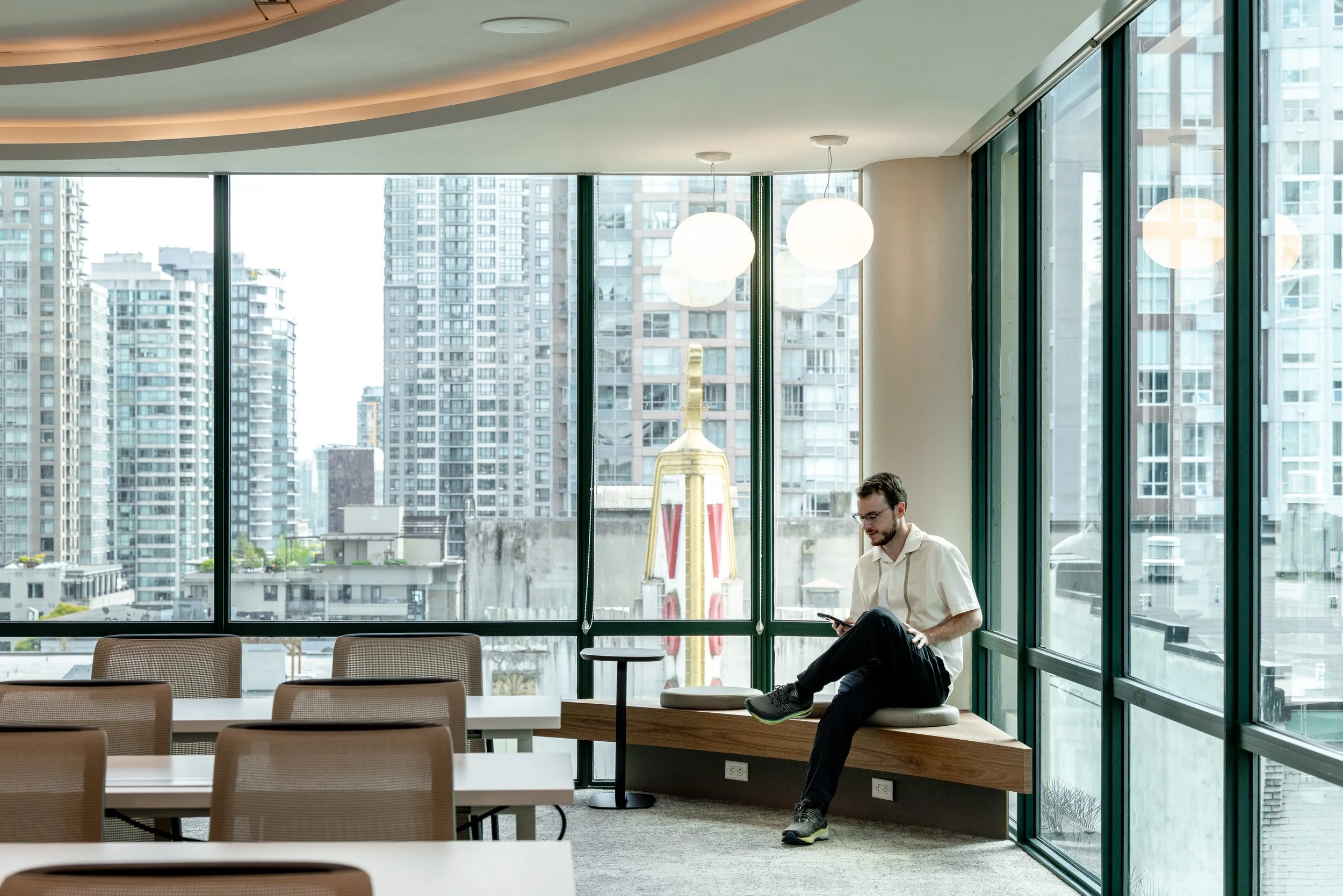
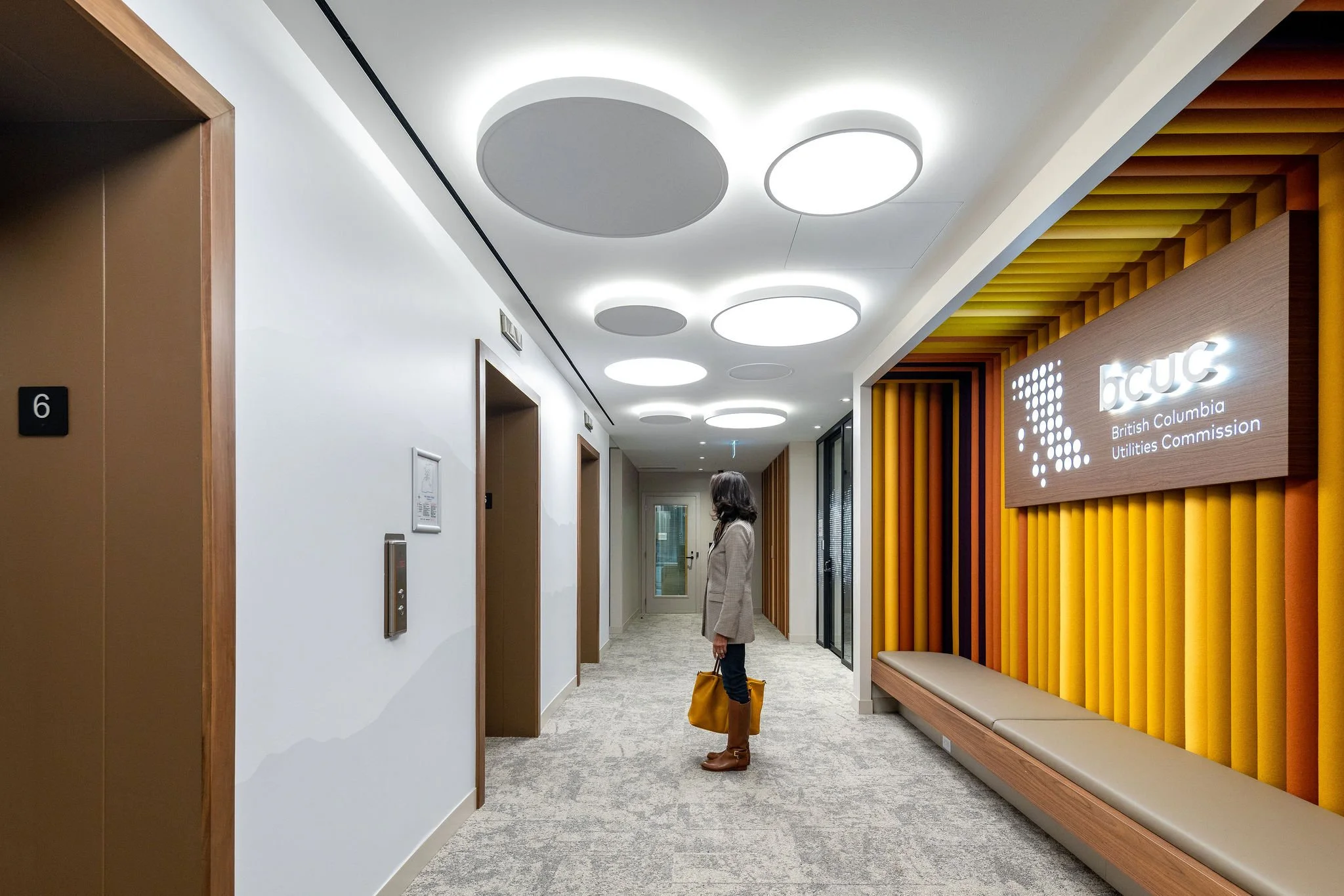
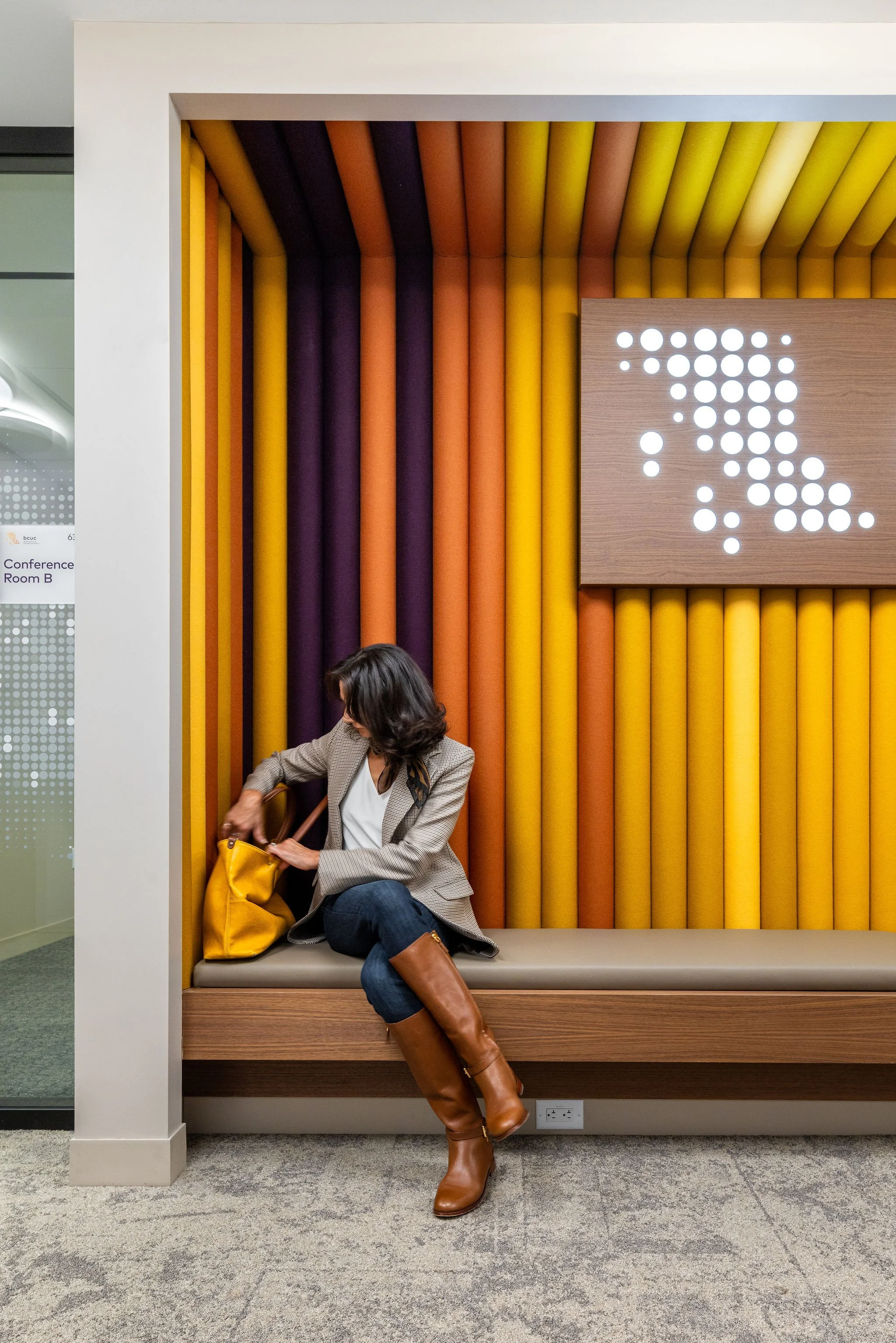
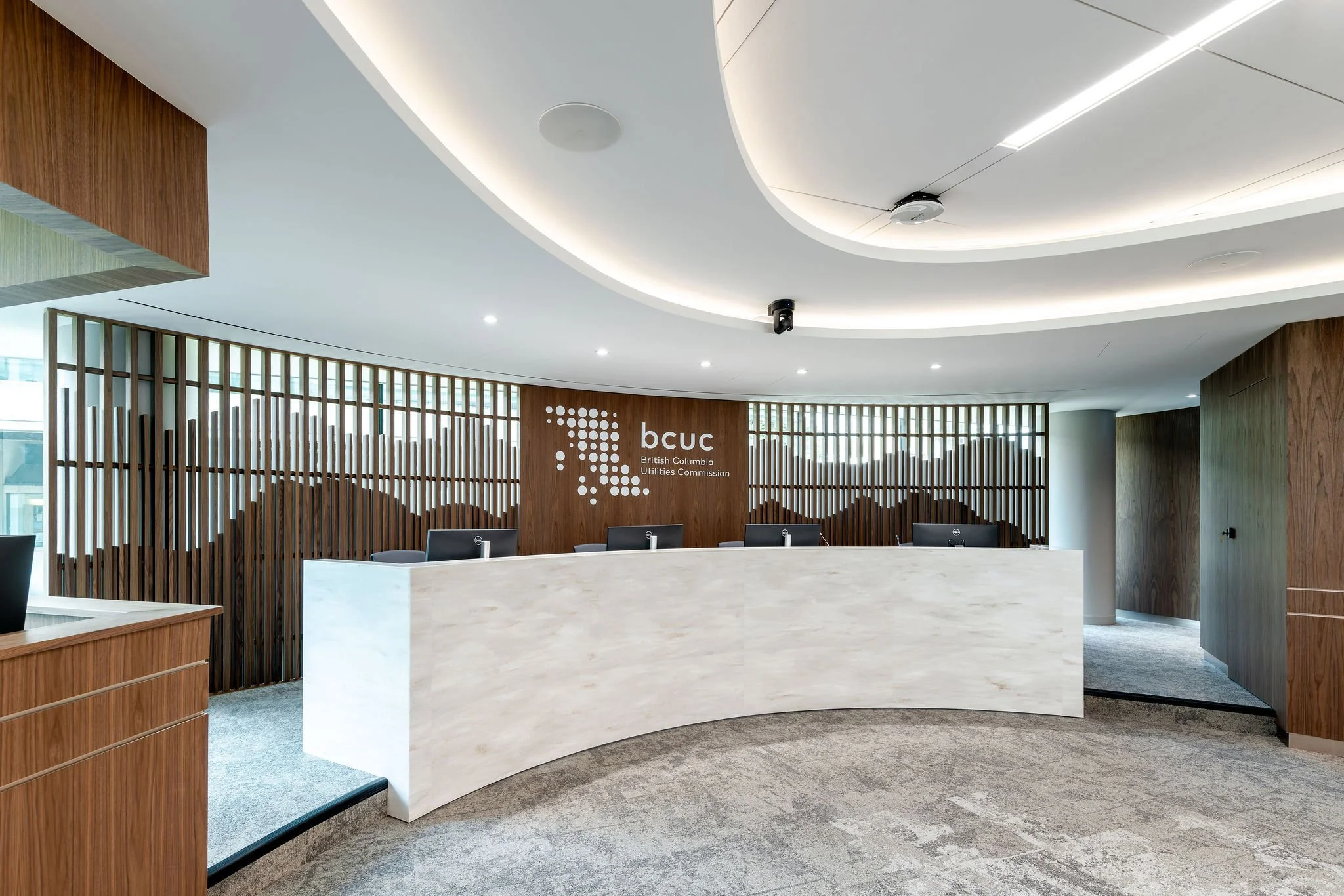
Materiality and detailing were developed to resolve multiple needs at once. Strategic branding, the refined use of real wood, and carefully calibrated lighting reinforce public confidence through a composed, capable, and trustworthy environment.
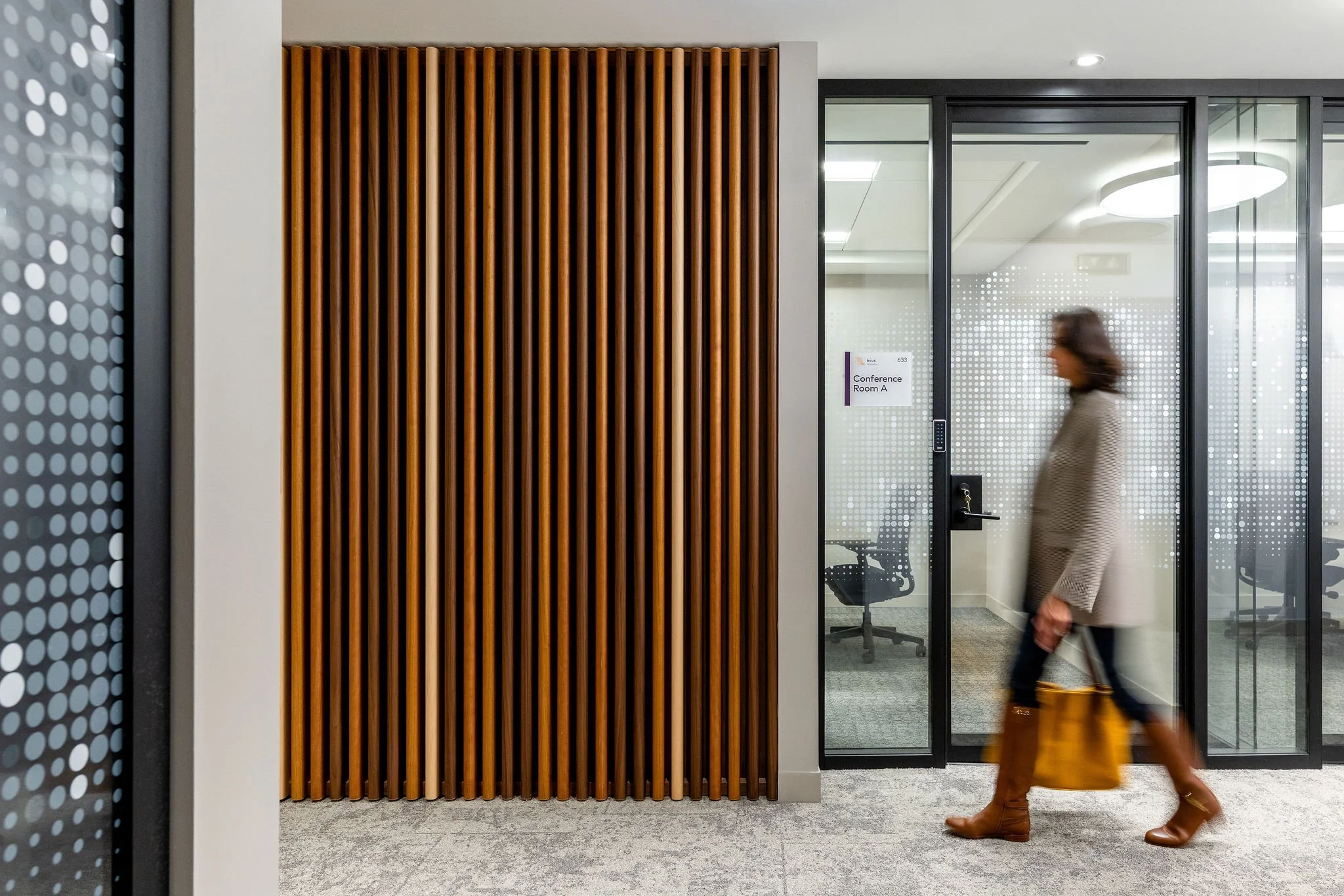
This integrated thinking extends beyond the Hearing Room to improve the full experience of the suite. The renovation includes a redesigned elevator arrival sequence that establishes a clear, calm identity from the moment users enter the floor. It also features reconfigured caucus rooms with integrated technology and acoustic separation, two new quiet rooms for lower-intensity meetings, and the addition of a universal washroom—a critical upgrade that significantly improves the overall accessibility and inclusivity of the space.
The result is a high-performing institutional environment that does not rely on a single decorative gesture. It is a space shaped by overlapping needs, designed to serve evolving requirements while remaining coherent, purposeful, and grounded in its civic role.