

I remember visiting Sperlonga many years ago, staying with family friends in a makeshift beachside cottage, likely long gone now, and perhaps never entirely legitimate to begin with. I can still feel the warmth of the Mediterranean Sea, its waters impossibly clear, and the wide, soft stretch of beach that seemed to go on forever. At the time, I had no inkling that architecture would become my life’s work.
Nearly four decades later, I returned, this time with close to 25 years of architectural experience shaping how I see the world. Sperlonga, through that lens, revealed itself anew: vibrant, layered, and strangely alive.
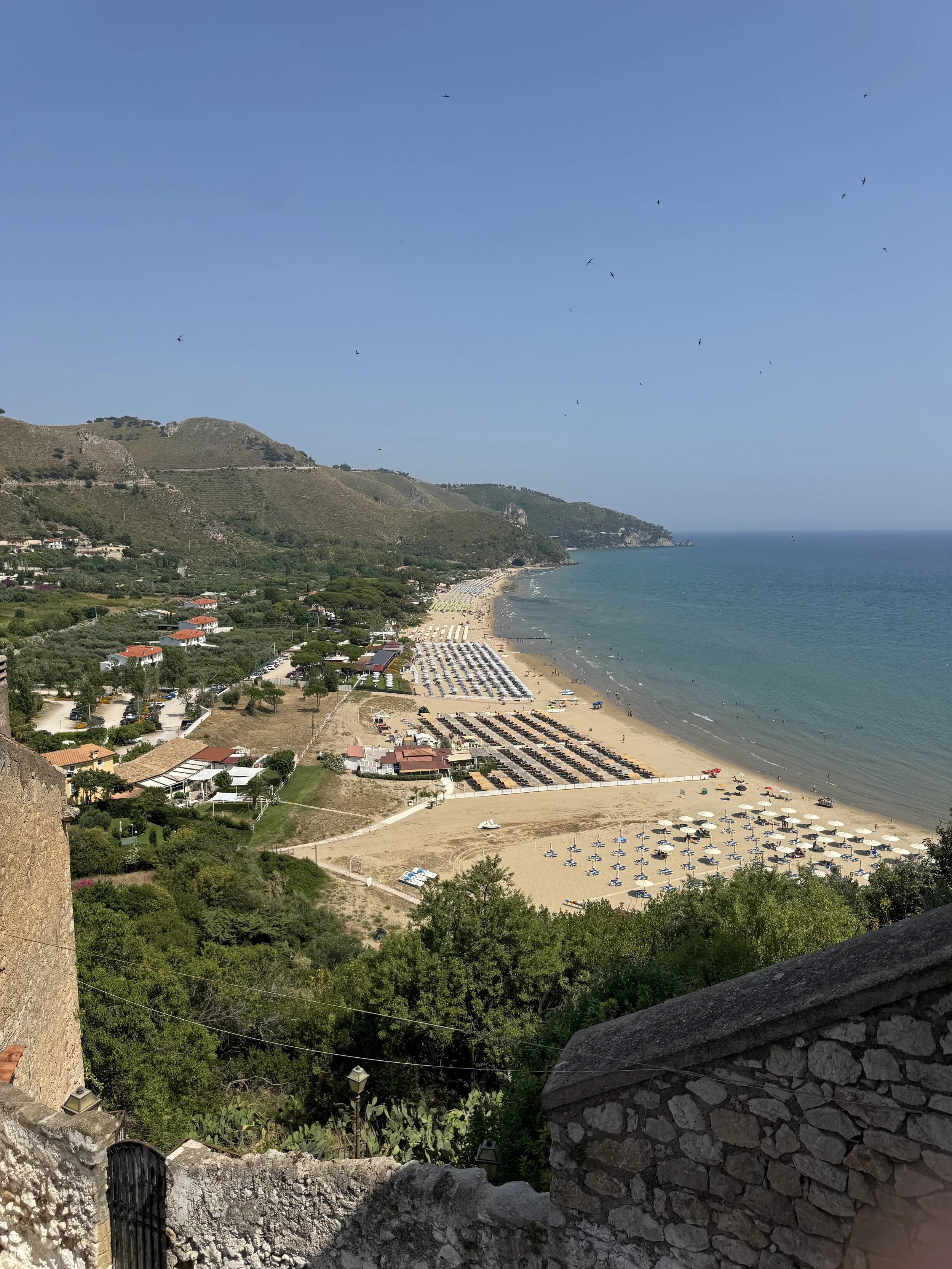


The village clings to a rocky outcropping, the kind of siting no contemporary architect would likely recommend, and yet, there it is. Timeless. Defiant.
Coming from North America, I’m always struck by the sheer audacity and charm of these historic European settlements. But it was the connective tissue of the town that captivated me most this time: the narrow walkways, vaulted portals, carved stairs, and winding paths that seem to lead nowhere, and everywhere.
At the centre of Sperlonga, the main piazza, built atop a modern parkade, is the heart of the village, unfolding into an expansive civic space. The views are breathtaking, whether carefully composed or simply the product of centuries of happenstance. And the disorienting layout, light falling and rising unpredictably, adds a sense of playful uncertainty. Each turn reveals something new. Or old. Or both.
I found myself in that main square for hours each evening, drawn into its quiet rhythm. There was no great event, no performance. Just people, locals and visitors, lingering, talking, sipping wine, laughing. The setting itself wasn’t particularly remarkable: simple tables and chairs, textured walls, soft lighting, layered colors. And yet, together, it created something unforgettable.
Ultimately, isn’t that what we seek in public space? Not perfection or spectacle, but simply the chance to enjoy being together. A place that feels right without trying too hard.

Back home in Vancouver, majestic in its own way, with views to rival any coastline, I’m struck by how little of that lived vibrancy we manage to capture in our public spaces. And so I return to this question often in my work: What is it that creates a sense of community and belonging? What makes a place memorable, magnetic?
In the quiet of a Tuesday evening in Sperlonga, among people I didn’t know, I glimpsed part of the answer.


